

Fresh Coffee Beans for Home Office: A 2026 Guide
Table of Contents
- Why Fresh Coffee Beans for Home Office Beat Store-Bought
- Whole Bean vs Pre-Ground for Home Office: What Actually Matters
- How to Store Coffee Beans for Maximum Freshness
- Coffee Brewing Methods for Beginners
- Choosing the Right Roast Profile for Your Workday
- Coffee Subscription Services Explained
- Troubleshooting Common Home Office Brewing Failures
- Conclusion
- Frequently Asked Questions
Last Updated: October 2, 2026
Why Fresh Coffee Beans for Home Office Beat Store-Bought
Fresh coffee beans for home office brewing solve a problem most remote workers don't realize they have: stale coffee. Once beans are roasted, they begin losing aroma and flavor within days, and supermarket bags may sit on shelves for months before you open them. Tampa Bean Company delivers freshly roasted beans straight to your door, so your morning cup tastes the way the roaster intended. Below, we'll show you exactly how to store, grind, and brew those beans for the best results.

Here's what most guides get wrong: they treat all "fresh" coffee as equal. It isn't. A roast date tells you more than a "best by" label ever will.
Whole Bean vs Pre-Ground for Home Office: What Actually Matters
Whole bean coffee stays fresh longer than pre-ground because grinding exposes more surface area to oxygen, which speeds up staling. For a home office setup, whole beans give you flexibility: you grind only what you need, right before brewing.
Pre-ground coffee is convenient, but it loses aroma faster and locks you into one grind size. If your brewing method changes, your coffee can't adapt.
The practical middle ground? Choose a roaster that offers custom grind options. Tampa Bean Company lets you pick whole bean or a grind matched to your brewer, so you're not stuck with a one-size-fits-all bag.
| Factor | Whole Bean | Pre-Ground |
|---|---|---|
| Freshness window | Longer | Shorter |
| Grind flexibility | Full control | Fixed |
| Setup effort | Requires a grinder | None |
| Best for | Pour-over, espresso, French press | Drip, quick mornings |
How to Store Coffee Beans for Maximum Freshness
Storing coffee beans for a home office isn't just about keeping them away from light and heat, it's about fitting a freshness routine into a workspace where counter space is at a premium and interruptions are frequent. The goal is to minimize the time beans spend exposed to oxygen, moisture, and temperature swings while keeping them accessible enough that you actually use them.
Start with the right container. A one-way valve bag from the roaster is fine for the first week, but once you open it, transfer beans to an opaque, airtight canister. Ceramic or stainless steel with a silicone gasket works well; clear glass jars look nice but let light degrade oils. For a small home office, a 12- to 16-ounce canister is ideal, large enough to hold a week's supply but small enough to tuck into a drawer or shelf.
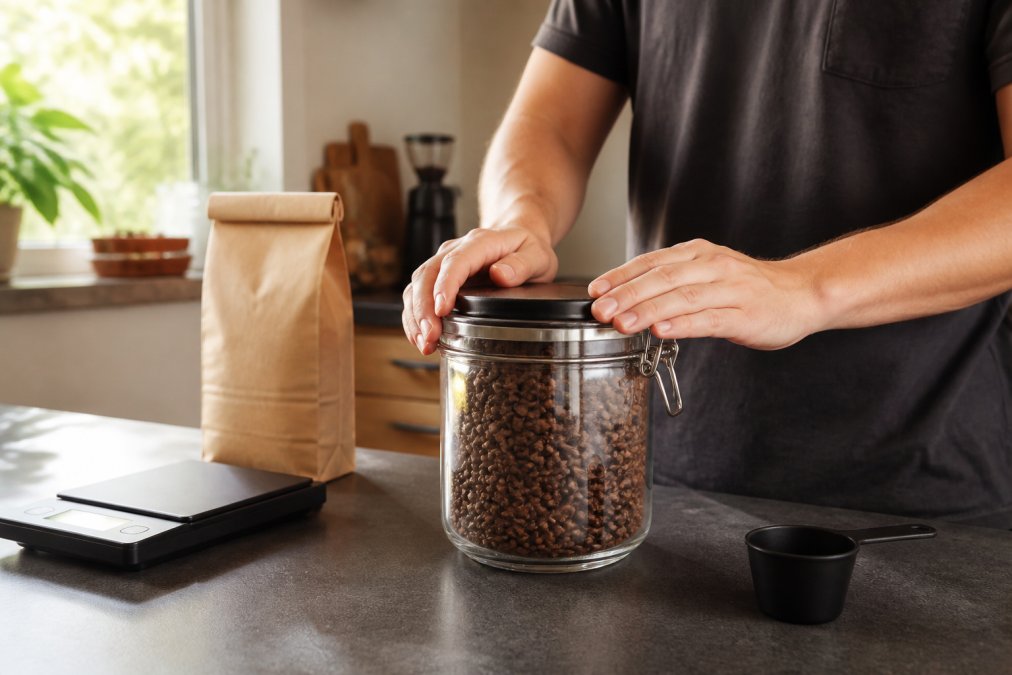
A common mistake is dumping beans into a grinder hopper and leaving them there for weeks. The hopper isn't airtight, and beans stale faster than you'd expect, often within days. Instead, keep the bulk of your supply sealed and refill the hopper with just enough for the day's brewing. If you use a single-dose grinder, weigh out 18-20 grams per cup and grind immediately before brewing.
Freezing works for longer storage, but only if you seal beans tightly in a vacuum bag or freezer-safe container and let them thaw fully before grinding. Moisture is the enemy here: condensation on frozen beans will ruin the next cup. A common pattern among home office workers is to buy a 2-pound bag, split it into weekly portions, and freeze all but the current week's supply. That way you're never more than a few days from a fresh roast.
Temperature stability matters more than most people think. Don't store beans next to a laptop, router, or other heat-generating equipment, those small temperature swings accelerate staling. A cool, dark cupboard away from the desk is better than a shelf above a monitor. If your office runs warm, consider a small airtight container in a drawer rather than on an open shelf.
Finally, think about workflow. If you brew multiple times a day, pre-portion beans into small airtight containers or test tubes for each brew. This reduces opening and closing the main canister, which exposes beans to fresh oxygen each time. It's a small habit that adds up to noticeably fresher coffee by the end of the week.
For a deeper dive on storage science, see Specialty Coffee Association's guide to coffee freshness.
Coffee Brewing Methods for Beginners
Most brewing guides focus on taste, but in a home office the real constraints are time, noise, and cleanup. You need a method that fits between meetings, doesn't drown out a call, and won't leave you scrubbing equipment when you should be working. Here's how the three beginner-friendly methods stack up against those constraints, and how to troubleshoot when your cup tastes off.
Drip: Set it and forget it. Best for back-to-back meetings when you can't hover over a kettle. A standard drip brewer takes 5-10 minutes and makes 4-12 cups, so you can brew once and reheat (though reheating sacrifices flavor). Noise level is moderate, a gentle gurgle that won't disrupt a call. Cleanup is minimal: toss the filter and rinse the carafe. For home offices, a drip brewer with a thermal carafe keeps coffee hot for hours without a hot plate scorching it.
French press: Full immersion, rich body, minimal equipment. Great for a slower morning. Takes about 4 minutes to steep, plus 30 seconds to press. Noise is low, just the plunge. Cleanup is the trade-off: you need to scoop out grounds and rinse the mesh filter, which can be messy. In a small office, a French press is compact but requires a sink nearby. If you're in a shared space, the grounds can clog drains, so consider a dedicated grounds bin.
Pour-over: More control over flavor, but it demands your attention for a few minutes.
Now, the home office troubleshooting angle that most guides skip: when your coffee tastes off, it's usually one of four things, stale beans, wrong grind, bad water, or inconsistent ratios. Here's a quick fix guide:
- Weak coffee: Grind finer or use more coffee per cup. Start with a 1:16 coffee-to-water ratio (e.g., 18g coffee to 288g water).
- Bitter coffee: Grind coarser or lower your water temperature slightly. Ideal brewing temperature is 195-205°F (90-96°C).
- Sour coffee: Increase extraction time or grind finer. Sourness often means under-extraction.
- Flat, lifeless coffee: Your beans are likely stale. Check the roast date, if it's more than four weeks old, that's the culprit.
Choosing the Right Roast Profile for Your Workday
Roast profile shapes flavor, caffeine feel, and how the coffee pairs with your tasks. Light roasts tend to be brighter and more acidic, medium roasts balance sweetness and body, and dark roasts lean smoky and bold.
Coffee Subscription Services Explained
A coffee subscription service delivers freshly roasted beans to your door on a schedule you choose, usually every two to four weeks. The appeal for home office workers is simple: you never run out, and you never settle for stale supermarket coffee.
| Subscription Feature | Why It Matters |
|---|---|
| Flexible schedule | Skip or pause during travel |
| Grind choice | Matches your brewer |
| Roast selection | Rotate based on preference |
| Delivery | No store trips |
Troubleshooting Common Home Office Brewing Failures
Most home office brewing failures trace back to four culprits: stale beans, wrong grind size, bad water, or inconsistent ratios. Fix those and your cup improves immediately.
- Weak coffee: Grind finer or use more coffee per cup.
- Bitter coffee: Grind coarser or lower your water temperature slightly.
- Sour coffee: Increase extraction time or grind finer.
- Flat, lifeless coffee: Your beans are likely stale. Check the roast date.
Conclusion
Stale beans are the quiet reason most home office coffee disappoints, and fixing that starts with a fresh roast and smart storage. Tampa Bean Company delivers quality, consistent coffee to your door with your choice of whole bean or custom grind, so every cup matches your brewing method. With cost-effective pricing and flexible delivery, it's an easy upgrade for anyone working from home.
Frequently Asked Questions
How can I ensure my home office coffee stays fresh?
Buy whole bean coffee with a visible roast date, store it in an airtight container away from light and heat, and grind right before brewing. Fresh coffee beans for home office use should be consumed within two to four weeks of the roast date for the best flavor. Avoid storing beans in the fridge or freezer unless you seal them properly and use them quickly, since moisture and odors can affect the taste.
Is it worth buying a coffee subscription for my home office?
A subscription works well if you drink coffee daily and want a consistent supply without remembering to reorder. Tampa Bean Company's House Blend and Breakfast Blend are both $22.99 per bag and can be set to arrive on your schedule. Subscriptions also let you choose whole bean or a custom grind, which helps match your brewing method and keeps your routine simple.
What are the benefits of custom-ground coffee for home brewing?
Custom grinding matches the particle size to your brewer, which affects extraction and flavor. A grind that is too coarse for espresso or too fine for a French press leads to weak or bitter cups. If you order whole bean and grind at home, you control freshness. If you prefer pre-ground, a roaster can set the grind for drip, pour-over, or espresso so you get better results from the first brew.
Which coffee is best for an office setting?
A medium roast blend like Tampa Bean Company's House Blend or Breakfast Blend suits most home office setups because it works across drip, pour-over, and French press. Medium roasts balance acidity and body, so they taste good black or with milk. If you want a single bag that handles multiple brewing methods and stays consistent, a medium blend is a practical choice for a workday routine.
Ready to stop settling for stale coffee? Get started with Tampa Bean Company and enjoy freshly roasted beans tailored to your brewer, delivered straight to your door.